
Land tenure
This page is a work in progress. We want to explain the complexity of land tenure arrangements in the Territory, as well as what reforms we are advocating. What counts as part of the ‘Aboriginal estate’? What distinguishes a remote community from a township?
Aboriginal Territorians won land rights in 1976
Since the Commonwealth Aboriginal Land Rights (Northern Territory) Act 1976 (ALRA), land tenure arrangements in the Northern Territory are unique. The ALRA is legal recognition of the Aboriginal system of land custody, and enables groups to win freehold title to their traditional lands (if and only if those lands are vacant Crown lands). Former reserves became Aboriginal lands overnight. Over time, about half of all land in the Northern Territory returned to Aboriginal hands.
Forging new pathways to building on homelands
ALRA strengthened the homelands movement. Once people had successfully reclaimed land, they could settle on it and begin to build infrastructure. But there remain significant obstacles to building housing on homelands:
- Aboriginal people and organisations wanting to build one or more houses on a homeland must have an agreement under section 19 of the ALRA. The process is lengthy because all of the traditional owners must agree.
- Homelands’ dwellings aren’t fungible. They cannot be bought or sold because they are communally-owned structures held by an Aboriginal land trust. So banks won’t lend money for their construction.
AHNT is working with land councils and both governments to consider ways Aboriginal people could be empowered to build housing on their ancestral lands without lengthy delays and with no erosion of land rights. Alternative governance models such as community land trusts may indicate a way forward.
Town camps
Title for each town camp title is held by a housing association under a perpetual lease.
Readings related to land rights and tenure
-
Report of the 2023 Remote Housing and Homelands conference
Report, recommendations and next steps after the AHNT-hosted Remote Housing and Homelands conference held 18 to 20 April 2023 in […]
-
Leasing reforms on Aboriginal land
The full title of Jayne Weepers’ paper is ‘Leasing reforms on Aboriginal land in the Northern Territory: Impacts on land […]
-
Self-build: Alternative housing procurement in remote Indigenous communities
This is a 60-page report by Sonja Peter and Javier Ayora for the Centre for Appropriate Technology in 2011. It […]
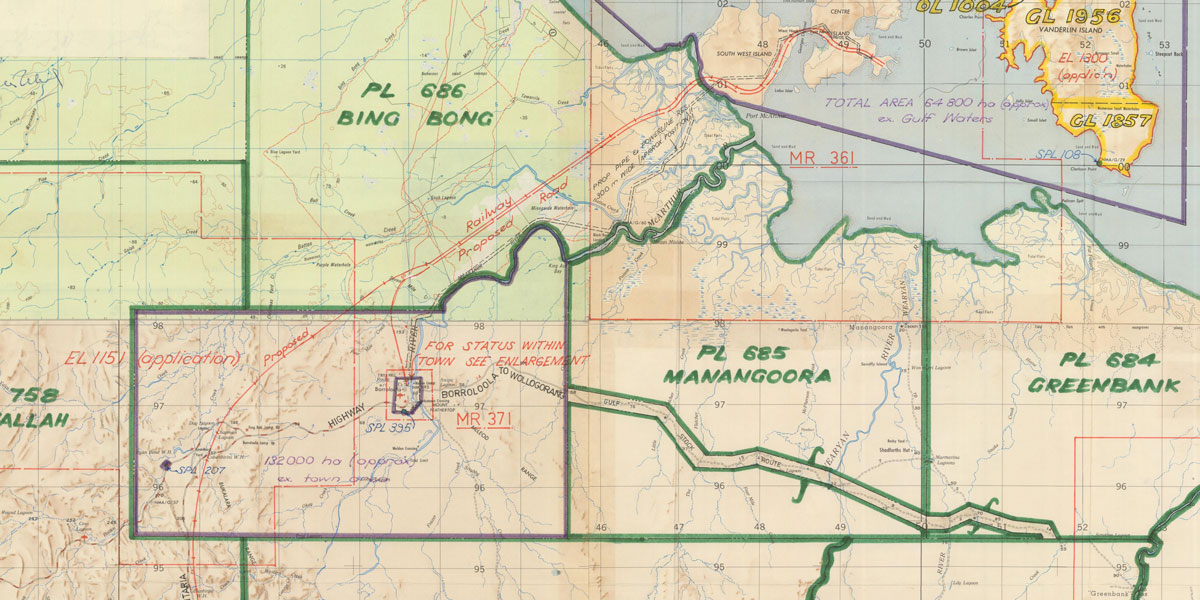
Image credit: Detail from a map of the Borroloola land claim, National Archives of Australia: E1477, LC1/36, p2